Bullying is a complex social issue that goes beyond individual behaviours. It involves emotions, relationships, group dynamics and the decisions people make when witnessing or experiencing situations of exclusion. Helping children and young people understand these dynamics requires more than simply explaining what bullying is: it means providing opportunities to reflect, develop empathy and explore different ways of interacting with others.
This is the educational approach behind BULL3D, a European project that uses 3D-printed educational puzzles and game-based activities to support bullying prevention in schools. Through three different tools, designed for different age groups and educational needs, the project encourages children and young people to explore social relationships, understand different perspectives and develop the skills needed to build more inclusive environments.
Rather than relying on lectures or theoretical explanations, BULL3D uses storytelling, hands-on activities, cooperation and guided reflection to turn abstract social concepts into tangible learning experiences.
The Robot Puzzle: understanding thoughts, emotions and actions (ages 6–8)
At an early age, developing emotional awareness and learning to recognise how our behaviour affects others are essential steps towards preventing bullying. The Robot Puzzle addresses these needs by helping children understand the connection between three fundamental dimensions of human behaviour: thoughts, emotions and actions.
Each part of the robot represents one of these dimensions: the head symbolises thoughts, the torso represents emotions, and the limbs illustrate actions. Through guided storytelling and discussion, children explore different social situations, including those involving bullying, and reconstruct the characters’ thoughts, feelings and behaviours by assembling the robot.
This hands-on approach makes abstract concepts easier to understand and encourages children to look beyond what someone does to consider why they might act that way. It also provides an opportunity to explore the different roles involved in bullying situations: the victim, the aggressor and the bystander.
The activity encourages emotional awareness, empathy, responsible decision-making and the development of an emotional vocabulary. At the same time, the educator can guide the discussion, observe group interactions and identify potential signs of exclusion or conflict.
Importantly, the Robot Puzzle does not seek to establish right or wrong answers. Its purpose is to encourage interpretation, dialogue and critical thinking in a safe and supportive learning environment.
The Mountain of Friendship: reaching the top together (ages 9–13)
While understanding emotions and behaviour is an important first step, preventing bullying also requires learning how to cooperate, support others and contribute to a sense of belonging.
The Mountain of Friendship approaches these challenges through a collaborative 3D board game in which players work together to reach the summit of a mountain. Along the way, they face different challenges, collect stars and unlock new stages and special items. Progress depends on the group’s participation and cooperation rather than individual competition.
The mountain becomes a representation of a shared journey: obstacles must be overcome together, every contribution matters, and reaching the top is a collective achievement.
Through this experience, participants are encouraged to reflect on bullying, social exclusion, empathy and the role of bystanders. They also practise communication, active listening, mutual support, respect for others and collective decision-making.
The collaborative nature of the game is particularly important. By making shared progress central to the experience, it reinforces the idea that everyone has a role in creating an inclusive group and that supporting others is a collective responsibility.
For educators, the game also provides an opportunity to observe how participants interact, how they distribute responsibilities and whether everyone is given the opportunity to contribute. These observations can help initiate meaningful discussions about inclusion and relationships within the classroom.
The Brain Puzzle and The Long Night: exploring social dynamics from different perspectives (ages 14+)
For older students, addressing bullying can involve exploring more complex social dynamics, including manipulation, abuse of power, peer pressure and the difficulty of intervening when someone is being targeted.
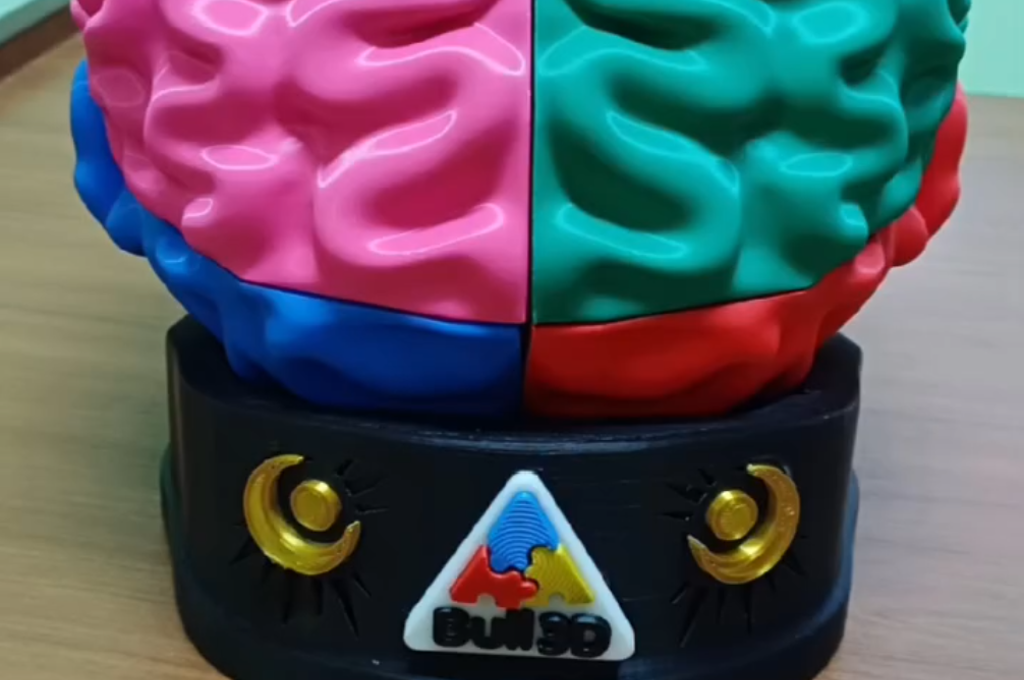
The Brain Puzzle is a versatile 3D educational tool designed to support different activities. One of the games developed around it is The Long Night, a social deduction game that introduces players to fictional social situations in which different characters have different objectives, abilities and roles within a wider group.
The game explores the three main positions involved in bullying dynamics: the victim, the aggressor and the bystander. Through its rules and interactions, participants encounter situations involving misinformation, manipulation, exclusion, silencing and difficult moral decisions.
Crucially, these situations take place within a controlled and supervised game environment. Potentially harmful interactions are translated into limited game mechanics, with safeguards designed to protect participants’ dignity and well-being. The intention is not to reproduce real bullying or expose students to harmful experiences, but to provide a structured opportunity to examine the social mechanisms that can contribute to it.
One of the game’s most valuable educational aspects is its exploration of different perspectives. Players can reflect on the vulnerability of someone who is unfairly blamed, the power and responsibility associated with manipulating others, or the difficulties faced by bystanders who want to help but do not always know how to intervene.
The game also encourages participants to consider how good intentions do not always lead to positive outcomes, how people can be influenced by misinformation and how individuals may unintentionally contribute to the very dynamics they are trying to prevent.
With appropriate facilitation and subsequent reflection, The Long Night can help older students develop critical thinking, perspective-taking and a deeper understanding of group behaviour and social responsibility.
Three puzzles, one shared educational purpose
Although each BULL3D puzzle uses a different approach, they share a common objective: helping children and young people understand bullying and develop the social and emotional skills needed to prevent it.
The Robot Puzzle focuses on emotional awareness and understanding behaviour. The Mountain of Friendship places cooperation and inclusion at the centre of the experience. The Brain Puzzle, through The Long Night, offers older participants the opportunity to explore complex social dynamics and reflect on the perspectives and responsibilities of those involved.
Together, these tools provide educators with complementary resources that can be integrated into educational activities and adapted to different age groups and learning needs.
BULL3D demonstrates how play can become a meaningful educational opportunity: not only to learn about bullying, but also to practise empathy, question behaviours, understand others and discover how individual actions can contribute to safer and more inclusive school communities.